
Creating a budget sounds simple. You calculate your income, list your expenses, decide how much you want to save, and try to follow the plan. Yet many people find it difficult to stick to a budget consistently.
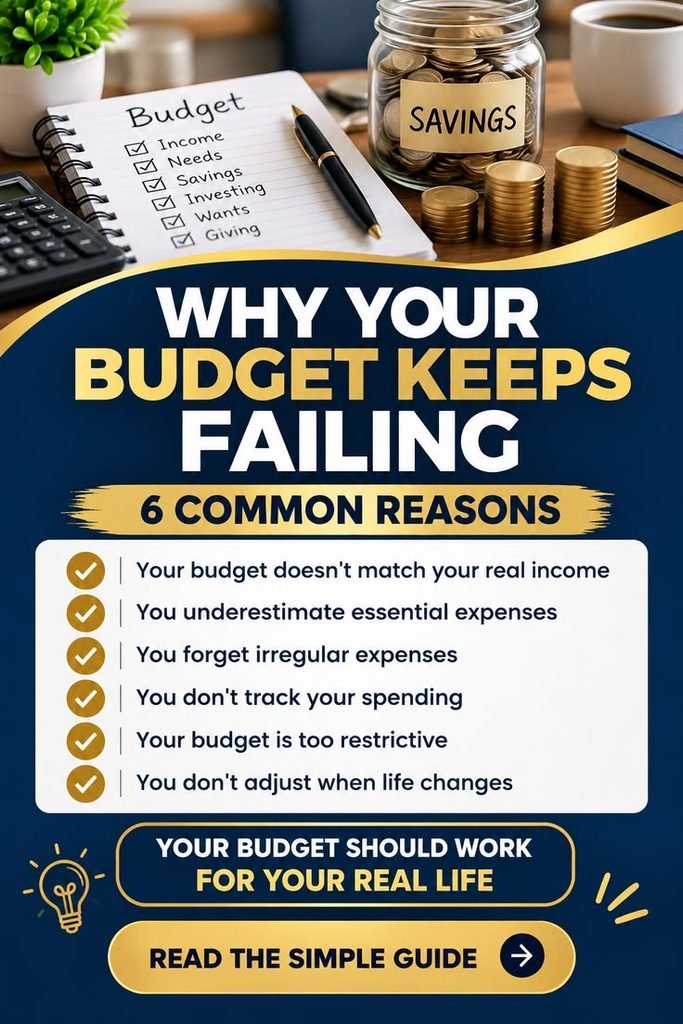
The problem is not always a lack of discipline. Budgets can fail because they are unrealistic, too restrictive, complicated, or disconnected from a person’s actual spending habits. Unexpected expenses and changes in income can also make a carefully prepared budget difficult to maintain.
Understanding why people struggle with budgeting can help you create a financial plan that is more practical and sustainable.
1. The Budget Is Too Strict
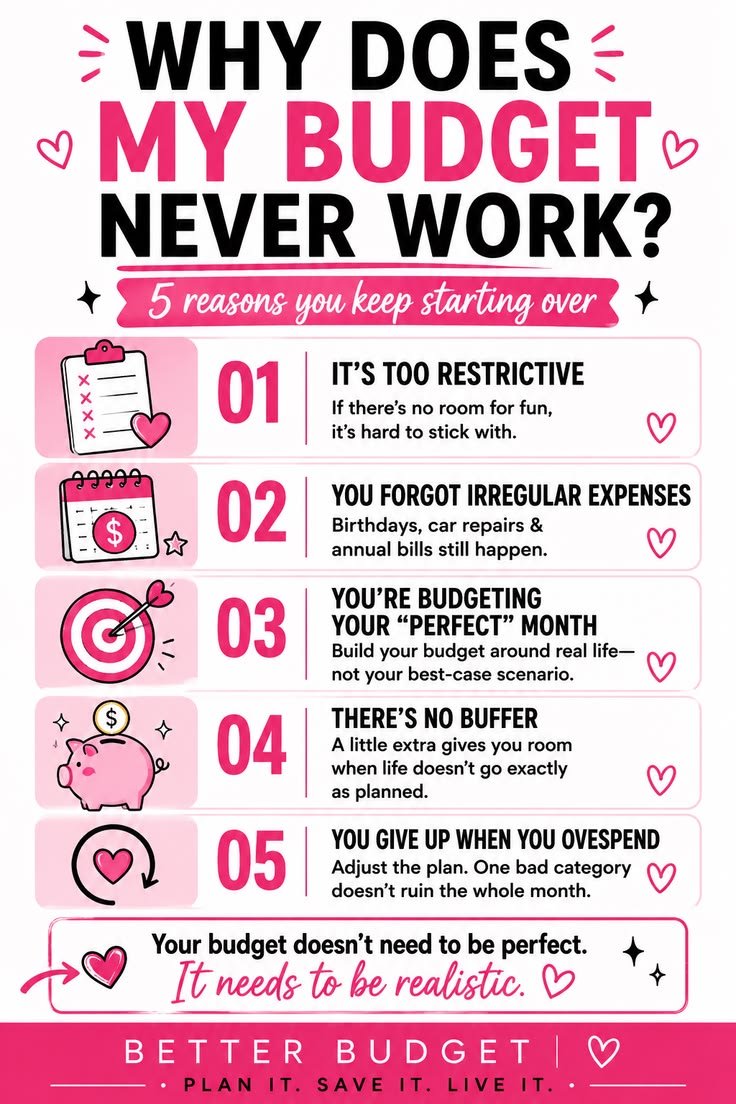
One of the most common reasons people abandon a budget is that it is too restrictive.
For example, someone might decide to completely eliminate restaurants, entertainment, shopping, and other nonessential spending. While this may seem like a quick way to save money, it can be difficult to maintain for months.
When a budget leaves no room for enjoyment, people may eventually become frustrated and abandon it altogether.
A better approach is to include a reasonable amount for discretionary spending. A budget should help you manage money rather than make everyday life unnecessarily difficult.
2. People Forget About Irregular Expenses
Many budgets focus only on monthly bills.
Rent, utilities, groceries, transportation, and subscriptions are easy to remember because they happen regularly. However, some expenses occur only occasionally.
Examples include:
- Car repairs
- Annual insurance payments
- Holiday spending
- Medical expenses
- Home maintenance
- School expenses
- Gifts
- Travel
When these costs appear unexpectedly, they can disrupt the entire budget.
One solution is to estimate irregular expenses and save for them throughout the year. Setting aside a small amount each month can make larger annual expenses easier to manage.
3. The Budget Does Not Match Reality
Another common problem is creating a budget based on how you think you spend rather than how you actually spend.
For example, you may estimate that you spend $300 per month on groceries but discover that your actual spending is closer to $450.
If your budget consistently underestimates expenses, you may feel like you are failing even when the problem is simply that the original numbers were unrealistic.
Review your actual spending for several months before setting strict limits. Real spending data can help you create a more accurate budget.
4. Small Purchases Add Up
People often pay attention to large expenses while ignoring small purchases.
A $5 coffee may not seem important. Neither does a $10 lunch, a small online purchase, or a $15 subscription.
However, frequent small purchases can add up over time.
This does not mean every small purchase needs to be eliminated. Instead, tracking these expenses can help you understand where your money is going.
Once you know which small expenses occur regularly, you can decide whether they fit comfortably within your financial priorities.
5. Impulse Spending Can Break a Budget
Impulse purchases are another challenge.
Online shopping makes it easy to purchase something within seconds. Social media advertising, discounts, limited-time offers, and personalized recommendations can encourage people to spend money they did not plan to spend.
A useful strategy is to create a waiting period for nonessential purchases.
For example, you might wait 24 hours before buying a relatively inexpensive item and several days before making a major purchase.
The goal is to give yourself time to decide whether you actually need the item or simply want it in the moment.
6. People Do Not Track Their Spending
A budget can only work if you know whether you are following it.
Some people create a budget at the beginning of the month and never check it again.
As the month continues, spending may gradually move away from the original plan.
Checking your accounts regularly can help you identify problems before they become serious.
You do not have to track every transaction manually. Banking tools, spreadsheets, and budgeting applications can make the process easier.
7. Unexpected Events Happen
Even the best budget cannot predict everything.
A vehicle may suddenly need repairs. A medical expense may arise. Your home may require maintenance. Your income could also change.
These situations can make it difficult to follow a normal monthly budget.
This is why emergency savings are important. Having money available for unexpected expenses can prevent one financial problem from disrupting your entire plan.
A flexible budget should also allow you to adjust spending when circumstances change.
8. Income May Change
Budgeting can be particularly difficult for people whose income varies.
Freelancers, contractors, business owners, commission-based workers, and people with irregular working hours may not receive the same amount every month.
Instead of building a budget around your highest possible income, consider using a conservative estimate based on your typical or lower income.
When you earn more than expected, the extra money can be directed toward savings, debt repayment, or other financial goals.
9. Budgeting Can Feel Complicated
Some people avoid budgeting because they believe it requires complicated spreadsheets and extensive financial knowledge.
It does not.
A basic budget can be as simple as:
Income − Essential Expenses − Savings − Debt Payments = Available Spending Money
You can begin with a few major categories and become more detailed if necessary.
The best budgeting system is often the one you can actually maintain.
10. People Set Goals That Are Too Difficult
Setting ambitious financial goals can be motivating, but unrealistic goals can also lead to frustration.
For example, someone might decide to save half of their income immediately without considering rent, food, transportation, debt payments, and other obligations.
When the goal becomes impossible to maintain, the person may stop budgeting altogether.
Instead, set achievable targets and increase them gradually as your financial situation improves.
11. Budgeting Does Not Include Personal Priorities
A budget should reflect what matters to you.
If travel is important to you, include a travel category. If you enjoy eating out occasionally, create room for restaurants.
Removing everything you enjoy may make your financial plan unsustainable.
The purpose of budgeting is not simply to spend as little as possible. It is to use your money intentionally.
How Can You Make a Budget Easier to Follow?
Start by making your budget realistic.
Review your actual spending and identify your essential expenses. Then determine how much you can reasonably save and how much discretionary spending you can afford.
Automating savings can also help. Set up automatic transfers after payday so that saving becomes part of your normal routine.
Another useful strategy is to review your budget weekly or every few days rather than waiting until the end of the month.
If you overspend in one category, do not immediately give up. Adjust another category if possible and continue with your plan.
Should You Change Your Budget?
Yes. A budget is not a permanent document.
Your income, expenses, goals, and lifestyle can change over time. A budget that worked six months ago may not work today.
Review your budget regularly and make adjustments when necessary.
For example, receiving a raise could allow you to increase savings. Moving to a new home could change your housing costs. Paying off a loan could free up money for another goal.
Adjusting your budget is not a failure. It is part of effective financial planning.
Final Thoughts
People struggle to stick to budgets for many reasons. A budget may be too restrictive, unrealistic, complicated, or unable to account for irregular expenses. Impulse purchases, unexpected costs, changing income, and a lack of spending tracking can also make budgeting difficult.
The solution is not necessarily to create stricter rules. Instead, build a budget that reflects your real life.
Give yourself reasonable flexibility, plan for unexpected expenses, track your spending, and review your financial goals regularly.
A successful budget is not one that you follow perfectly every month. It is a financial system that helps you understand your money, make intentional choices, and gradually move toward your financial goals.