

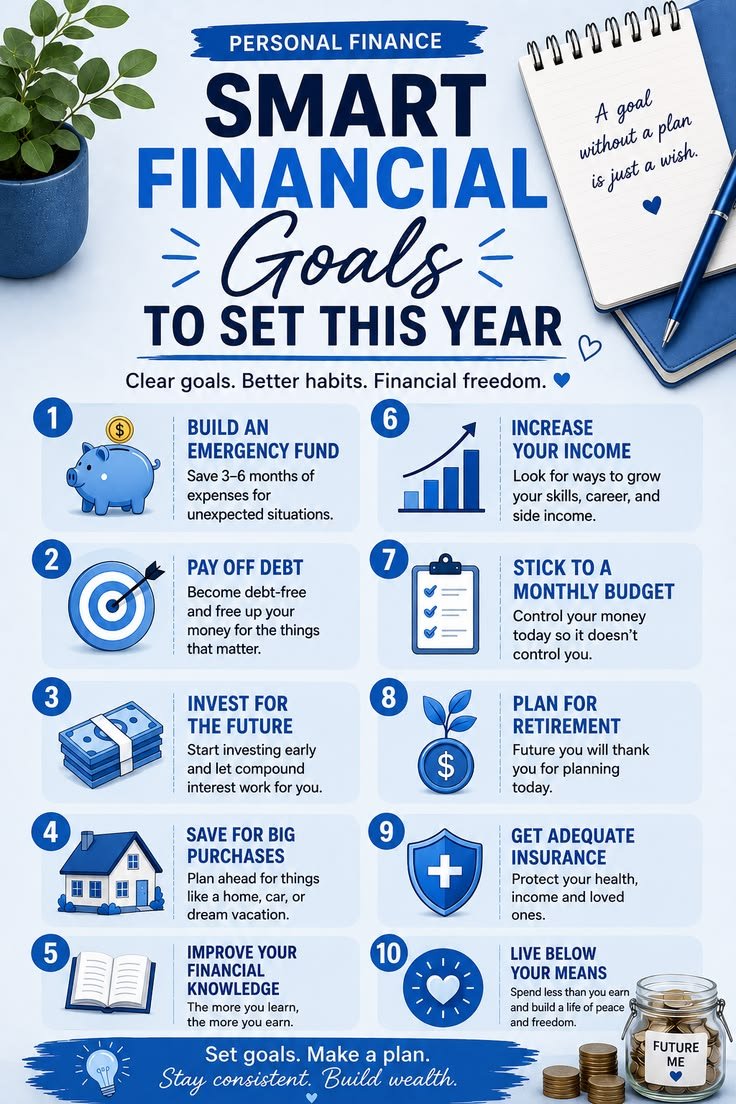

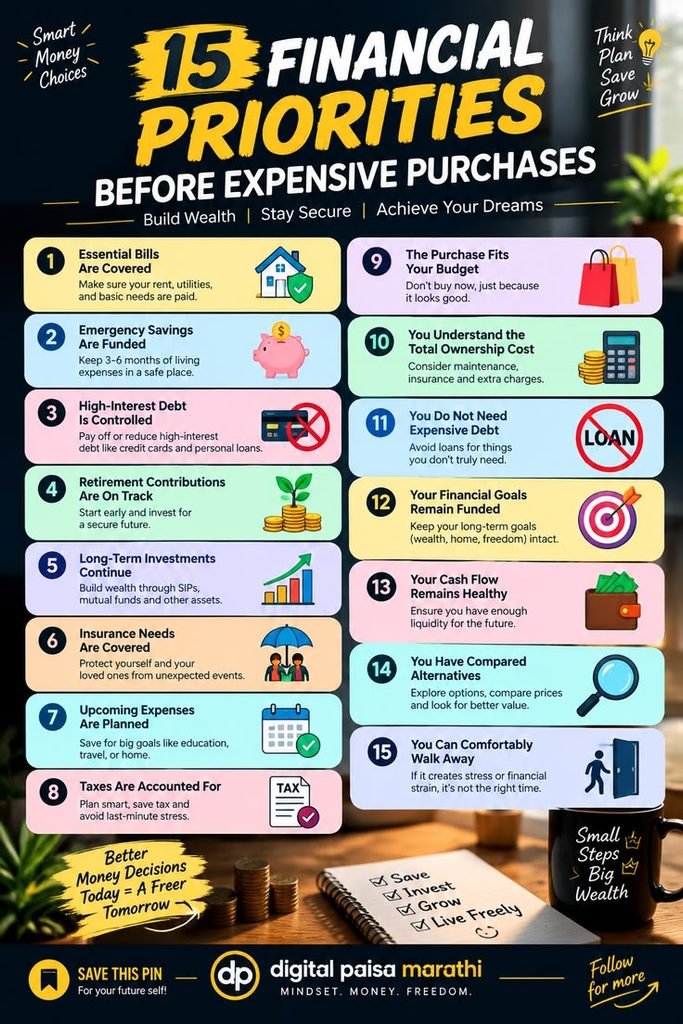
Managing money becomes easier when you have clear financial goals. However, many people have several goals at the same time. You may want to build an emergency fund, pay off debt, save for a home, invest for retirement, and still have enough money for everyday expenses.
Trying to accomplish everything at once can feel overwhelming. The solution is not necessarily to give up on your goals but to decide which ones deserve your attention first.
Prioritizing financial goals can help you use your income more effectively and create a stronger financial foundation. The right order will depend on your personal circumstances, but several goals are commonly important when building a financial plan.
1. Cover Your Essential Expenses
Before focusing heavily on long-term goals, make sure your basic needs are being covered.
Housing, food, utilities, transportation, insurance, and other necessary expenses should generally be accounted for in your budget.
If your monthly expenses are consistently higher than your income, investing or saving aggressively may not be sustainable. Start by understanding your essential costs and creating a realistic spending plan.
Knowing how much you need to maintain your basic lifestyle gives you a foundation for setting other financial goals.
2. Build a Starter Emergency Fund
An emergency fund is one of the first financial goals many people should consider.
Unexpected expenses can happen at any time. A vehicle may require repairs, an appliance may break, or an unexpected bill may arrive.
Without savings, you may have to rely on credit cards or loans to cover these expenses.
If you currently have no emergency savings, consider starting with a small, achievable target. For example, you could work toward saving $500 or $1,000 before moving toward a larger emergency fund.
The exact amount will depend on your circumstances.
3. Pay High-Interest Debt
High-interest debt can make it difficult to build wealth because interest charges can consume a significant amount of your money.
Credit card debt is one example. If you carry a balance from month to month, interest can increase the amount you ultimately pay.
After establishing a basic emergency cushion, consider prioritizing high-interest debt while continuing to meet required payments on other debts.
Reducing expensive debt can free up money that can later be directed toward savings and investments.
4. Take Advantage of Employer Retirement Contributions
If your employer offers a retirement plan with matching contributions, understand how the program works.
An employer match can provide additional money toward your retirement when you meet the plan’s requirements.
The specific rules vary by employer and retirement plan, so review the plan documents carefully.
Retirement is a long-term goal, and starting early can give your savings more time to potentially grow.
5. Build a Larger Emergency Fund
After dealing with immediate financial priorities and expensive debt, you may want to strengthen your emergency savings.
Some people aim to maintain several months of essential living expenses in an emergency fund. The appropriate amount depends on factors such as job stability, household income, monthly expenses, and financial responsibilities.
Someone with a stable income and few financial obligations may have different needs from someone whose income varies significantly.
Keep emergency savings in an appropriate account where it is accessible when needed.
6. Save for Major Short- and Medium-Term Goals
Once your basic financial foundation is stronger, you can focus on specific goals.
These might include:
- A home down payment
- A vehicle
- Education
- A wedding
- Travel
- Starting a business
- Major home improvements
Create separate savings targets when possible. Knowing exactly what you are saving for can make it easier to determine how much to put aside each month.
For example, if you want to save $12,000 for a goal over two years, you would need to set aside an average of $500 per month, assuming no interest or investment growth.
7. Increase Retirement Savings
Retirement planning should remain an important long-term priority.
Once immediate financial needs are under control, consider increasing contributions to appropriate retirement accounts.
The amount you should save depends on your age, income, expected retirement lifestyle, existing savings, and other factors.
It is also important to understand the differences between retirement accounts and the tax rules that apply to them.
Regular contributions can help make retirement saving a normal part of your financial routine.
8. Invest for Long-Term Goals
Investing can be useful for long-term financial goals, but it generally should not replace an emergency fund.
Money you may need soon is usually treated differently from money intended for long-term growth because investments can lose value.
Before investing, understand your goals, time horizon, and tolerance for risk.
A diversified approach may help reduce the impact of poor performance from a single investment, although diversification cannot eliminate investment risk.
9. Protect Your Financial Progress
Financial goals are not only about saving and investing. Protecting what you have is also important.
Depending on your circumstances, insurance can help protect against certain financial risks. Examples include health insurance, auto insurance, homeowners or renters insurance, disability insurance, and life insurance.
The types and amounts of coverage you need will depend on your circumstances.
Insurance should be reviewed periodically to make sure your coverage continues to match your situation.
10. Plan for Long-Term Wealth
Once your basic financial goals are under control, you can think about broader wealth-building objectives.
These could include increasing investments, paying off a mortgage early, starting a business, purchasing investment property, or creating additional sources of income.
There is no single strategy that works for everyone.
The important thing is to make sure these goals fit into your overall financial plan and do not undermine more immediate priorities.
How Should You Decide Which Goal Comes First?
A useful way to prioritize goals is to consider four factors: urgency, financial impact, risk, and time frame.
An urgent financial problem should generally receive attention before a distant goal.
For example, being unable to pay your rent is a more immediate concern than saving for a vacation several years from now.
Financial impact also matters. High-interest debt can grow quickly, while an emergency fund can protect you from taking on additional debt when unexpected expenses occur.
Your personal circumstances should also influence your priorities.
Someone with significant debt may have a different plan from someone who has no debt and substantial savings.
Should You Focus on One Goal at a Time?
You do not necessarily have to complete one financial goal before beginning another.
Some goals can be pursued simultaneously.
For example, you might contribute enough to a workplace retirement plan to receive an available employer match while also building an emergency fund and paying down high-interest debt.
The key is to avoid spreading your money so thinly that none of your goals make meaningful progress.
A simple system can be to identify one or two primary goals while maintaining minimum contributions toward other important priorities.
Create a Financial Goal Timeline
Putting your goals into time categories can make them easier to manage.
Short-term goals: These may include paying bills, building initial emergency savings, and paying down high-interest debt.
Medium-term goals: These could include saving for a home, vehicle, education, or other major purchases.
Long-term goals: These may include retirement, long-term investing, and building wealth.
Creating a timeline allows you to see which goals require immediate attention and which can be addressed gradually.
Final Thoughts
Financial goals are easier to manage when you prioritize them instead of trying to accomplish everything at once.
For many people, a sensible starting point is to cover essential expenses, establish emergency savings, manage high-interest debt, take advantage of available employer retirement contributions, and then increase long-term savings and investments.
Your priorities may be different depending on your income, debt, family responsibilities, and future plans.
The most important step is to create a financial plan that reflects your circumstances. Review your goals regularly and adjust them as your life changes.
Financial progress is rarely about making one perfect decision. It is usually the result of making consistent, informed choices over time.