

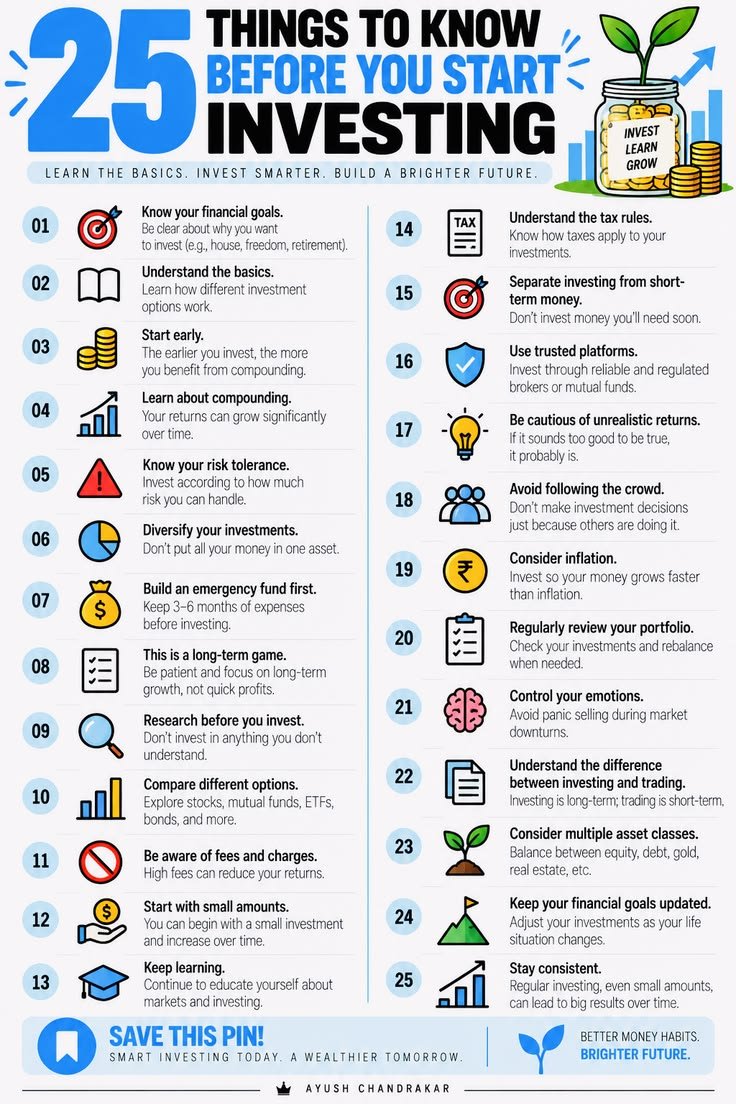


Investing can seem complicated when you are just getting started. Financial markets move up and down, there are thousands of investments to choose from, and financial terminology can be difficult to understand.
For beginners, long-term investing can provide a more structured way to approach the market. Instead of focusing primarily on short-term price movements, long-term investors generally focus on building wealth gradually over many years.
Long-term investing does not eliminate risk or guarantee profits. Investments can lose value, and past performance does not guarantee future results. However, having a longer time horizon can provide certain advantages and may make it easier to focus on broader financial goals.
What Is Long-Term Investing?
Long-term investing generally means purchasing investments with the intention of holding them for an extended period, often many years or even decades.
For example, someone saving for retirement may invest money with a time horizon of 20 or 30 years. Rather than attempting to profit from daily market movements, the investor may focus on consistent contributions and long-term growth.
The exact definition of “long term” can vary depending on the investor and the financial goal.
A longer investment period can allow an investor to experience multiple market cycles, including periods of growth and decline.
1. It Gives Your Money More Time to Grow
One major reason beginners may consider long-term investing is time.
When money remains invested for many years, there is more opportunity for potential growth. If investment earnings are reinvested, compounding can potentially increase the value of an investment over time.
For example, if an investment generates returns and those returns remain invested, future returns may be earned on both the original investment and previously accumulated earnings.
Returns are never guaranteed, but a long investment horizon gives compounding more time to work.
2. It Can Reduce the Pressure of Short-Term Market Movements
Financial markets can be volatile.
Stock prices can rise significantly during some periods and fall sharply during others. Beginners who constantly monitor their investments may become worried when prices decline.
A long-term approach can make short-term fluctuations less central to the overall strategy.
For example, someone investing for retirement several decades from now may have more time to recover from temporary market declines than someone who needs the money within a few months.
This does not mean market declines should be ignored. Instead, the investment strategy should reflect the investor’s time horizon and financial needs.
3. It Encourages Consistent Investing
Long-term investing can encourage a habit of making regular contributions.
For example, an investor might contribute $200, $500, or another affordable amount every month to an investment account.
Regular contributions can help investors build their portfolios gradually rather than trying to determine the perfect time to invest all their money.
A consistent approach can also make investing part of a normal financial routine.
4. Beginners Do Not Need to Predict the Market
Trying to predict exactly when stocks will rise or fall is extremely difficult.
Short-term traders may spend significant amounts of time analyzing market movements and attempting to identify opportunities.
Long-term investors may take a different approach. Rather than trying to predict every market movement, they may focus on investing consistently and maintaining a portfolio appropriate for their goals.
This can simplify the investment process for someone who is still learning.
5. Diversification Can Help Manage Risk
Long-term investors can use diversification as part of their investment strategy.
Diversification means spreading money across different investments instead of concentrating everything in one company or asset.
For example, a diversified fund may hold shares of many different companies across various industries.
If one company performs poorly, the impact on the overall portfolio may be smaller than if all of the investor’s money were invested in that single company.
Diversification cannot eliminate losses, but it can help reduce concentration risk.
6. It Can Support Retirement Planning
Retirement is one of the most common reasons people invest for the long term.
Someone beginning their career may have several decades before retirement. This extended time horizon can allow them to make regular contributions and potentially benefit from long-term investment growth.
Retirement accounts can also provide tax advantages depending on the type of account and applicable rules.
People should understand the contribution limits, withdrawal rules, fees, and tax treatment associated with any retirement account they use.
7. Long-Term Investing Can Reduce Emotional Decisions
Emotions can strongly influence financial decisions.
When markets rise quickly, investors may feel pressure to buy because they fear missing out. When markets fall, they may feel pressure to sell because they are afraid of losing more money.
A long-term strategy can provide a framework for making decisions based on predetermined goals rather than daily emotions.
Having a written investment plan can help you remember why you invested in the first place.
8. It Can Make Investing More Convenient
Long-term investing does not necessarily require checking your portfolio every day.
If you have a diversified portfolio and a clearly defined investment strategy, you may only need to review it periodically.
Some investors use automatic contributions, allowing money to be transferred into their investment accounts regularly.
Automation can make it easier to maintain consistent contributions without having to make a new decision every payday.
9. Starting Small Can Still Be Useful
Beginners sometimes believe they need thousands of dollars before they can start investing.
Depending on the account and investment platform, it may be possible to begin with a relatively small amount.
The important thing is to avoid investing money that you need for immediate expenses or emergencies.
Before investing, make sure you understand the costs, risks, and requirements associated with the account and investments you choose.
Starting with a manageable amount can help you learn while developing an investing habit.
10. Long-Term Investing Requires Patience
One of the most important qualities for a long-term investor is patience.
Investment growth usually does not happen overnight. Markets can experience periods of strong performance as well as significant declines.
A long-term investor needs to be prepared for uncertainty and understand that losses can occur.
Patience does not mean ignoring your investments completely. You should still review your portfolio periodically and make changes when your financial goals, time horizon, or circumstances change.
What Should Beginners Invest In?
There is no single investment that is right for every beginner.
Some investors choose diversified mutual funds or exchange-traded funds that provide exposure to many companies or bonds. Others may use a combination of different asset classes based on their financial goals.
The appropriate choice depends on factors such as your investment objective, time horizon, risk tolerance, and financial situation.
Before investing, understand what you are buying and how it works.
What Should Beginners Avoid?
Beginners should be cautious about investments that promise guaranteed or unusually high returns with little or no risk.
They should also avoid investing money needed for rent, bills, emergencies, or other immediate obligations.
Putting all your money into one stock or making investment decisions based solely on social media trends can also create unnecessary risk.
Take time to research investments and understand the potential downside before committing your money.
Final Thoughts
Long-term investing can be a useful approach for beginners because it focuses on gradual financial growth rather than short-term market predictions.
A longer time horizon can give investments more opportunity to potentially benefit from compounding, while regular contributions can help develop disciplined financial habits.
However, long-term investing does not guarantee profits. Investments can lose value, and every investor needs to consider risk carefully.
Before getting started, build an appropriate financial foundation, understand your goals, learn about diversification, and choose investments that match your circumstances.
The goal is not to become an expert overnight. Start by learning the basics, invest responsibly, remain patient, and review your strategy as your financial life develops.