
Starting your investment journey can feel overwhelming. There are stocks, bonds, mutual funds, exchange-traded funds, real estate, retirement accounts, and many other options available. For someone who is new to investing, understanding where to begin can be challenging.
The good news is that beginners do not need to understand every investment available before getting started. The most important steps are understanding your financial goals, learning how different investments work, considering risk, and choosing options that match your circumstances.
There is no single investment that is suitable for every beginner. The right choice depends on factors such as your income, financial goals, time horizon, risk tolerance, and existing savings.
What Should Beginners Consider Before Investing?
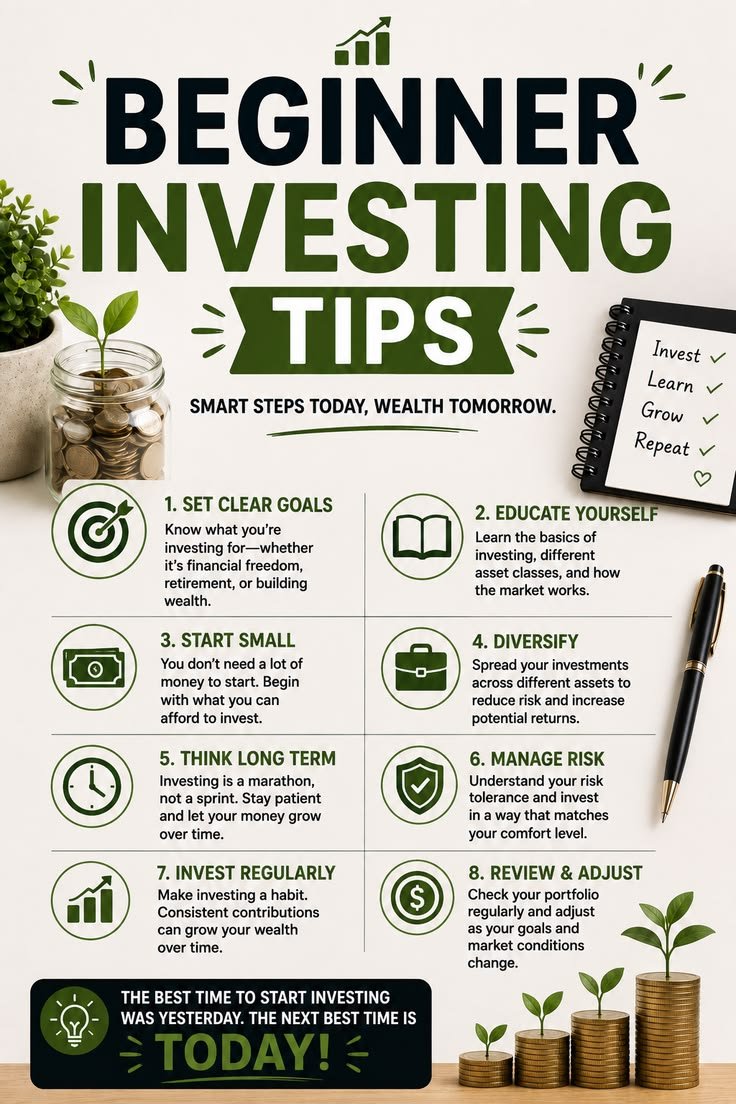
Before choosing an investment, it is important to establish a basic financial foundation.
Start by making sure your essential expenses are covered and consider building an emergency fund. If you have high-interest debt, such as expensive credit card debt, you may want to address that before investing substantial amounts.
You should also determine why you are investing.
Are you saving for retirement? A home? Education? Long-term wealth? Your goal and time horizon can influence the type of investment that may be appropriate.
Money you may need soon generally should not be exposed to the same level of market risk as money you will not need for decades.
1. Exchange-Traded Funds
Exchange-traded funds, commonly called ETFs, can be an option for beginners because many ETFs provide exposure to a collection of investments through a single fund.
For example, an ETF may hold shares of many companies rather than relying on the performance of one company.
This can provide diversification, which can reduce the impact of a poor performance from one individual investment. However, diversification does not eliminate the possibility of losing money.
Some ETFs track broad stock-market indexes, while others focus on particular industries, countries, bonds, or investment strategies.
Before buying an ETF, beginners should understand what the fund holds, its fees, investment strategy, and risks.
2. Mutual Funds
Mutual funds are another investment option beginners may encounter.
A mutual fund pools money from multiple investors and uses the combined money to purchase a portfolio of investments.
Like ETFs, mutual funds can provide diversification. Some funds are actively managed, while others are designed to track a particular market index.
Beginners should pay attention to expenses and other fees because investment costs can affect long-term returns.
It is also important to understand the fund’s objective and what assets it holds before investing.
3. Index Funds
Index funds are funds designed to track the performance of a particular market index.
Instead of trying to select individual stocks that a manager believes will outperform the market, an index fund generally attempts to follow a specific index.
For beginners, broad-market index funds can be appealing because they may provide exposure to many companies through a single investment.
However, index funds are still investments and can lose value when the underlying market declines.
4. Bonds
Bonds can play a role in an investment portfolio, particularly for investors who want exposure to fixed-income investments.
When you purchase a bond, you are generally lending money to an issuer, such as a government or corporation. In return, the issuer typically agrees to make interest payments and repay the principal according to the terms of the bond.
Bonds have different levels of risk. Government bonds, corporate bonds, and other types of fixed-income investments can behave differently depending on economic conditions and the financial health of the issuer.
Beginners should understand that bonds are not completely risk-free.
5. U.S. Treasury Securities
For U.S. investors, Treasury securities are another option to learn about.
The U.S. government issues several types of Treasury securities, including Treasury bills, notes, and bonds.
They are generally considered lower-risk investments relative to many other securities because they are backed by the U.S. government, although investors should still understand how interest rates, maturity, and other factors affect their value.
Treasury securities may be relevant for investors who want to learn about fixed-income investing or balance a portfolio that also contains stocks.
6. Retirement Accounts
A retirement account is not itself an investment. Instead, it is an account that can hold investments and may provide tax advantages depending on the account type.
Examples in the United States include employer-sponsored 401(k) plans and Individual Retirement Accounts (IRAs).
Inside these accounts, investors may have access to choices such as mutual funds, ETFs, stocks, or bonds.
Beginners should understand the rules associated with each account, including contribution limits, taxes, fees, and withdrawal requirements.
If an employer offers matching contributions through a workplace retirement plan, understanding the program can also be important.
7. Certificates of Deposit
Certificates of deposit, commonly called CDs, are another financial product beginners may encounter.
A CD generally requires you to deposit money for a specific period in exchange for an interest rate. Depending on the type of CD and institution, withdrawing money before maturity may result in a penalty.
CDs can be useful for certain short- or medium-term financial goals, but they generally have less potential for growth than long-term stock investments.
Interest rates and terms vary between financial institutions, so compare the details before choosing one.
8. Real Estate
Real estate can also be an investment, although it usually requires more money and involvement than buying a diversified fund.
Investors may purchase property with the goal of earning rental income, benefiting from potential appreciation, or both.
However, real estate involves expenses such as maintenance, insurance, property taxes, financing costs, and other potential expenses.
Because of the capital and management requirements, direct real estate ownership may not be the easiest starting point for every beginner.
Should Beginners Buy Individual Stocks?
Individual stocks can be part of an investment strategy, but they carry company-specific risk.
If you purchase shares in one company and that company performs poorly, your investment can lose significant value.
Beginners who choose individual stocks should research the company carefully and understand that even well-known companies can experience substantial price declines.
Some investors prefer diversified funds because they can spread their money across many companies rather than relying on the performance of one business.
What About Cryptocurrency?
Cryptocurrency is another asset class that beginners may encounter.
Cryptocurrencies can experience significant price volatility, and investors can lose substantial amounts of money. Regulatory conditions, technology, market sentiment, and other factors can affect prices.
Anyone considering cryptocurrency should understand that it is generally much more volatile than many traditional investments and should not assume that past price increases will continue.
Only consider risks you can financially afford to take.
How Much Should a Beginner Invest?
There is no universal amount that every beginner should invest.
Your investment amount should fit within your budget after accounting for essential expenses, emergency savings, and other financial obligations.
Some people may begin with a small monthly contribution and increase it as their income grows.
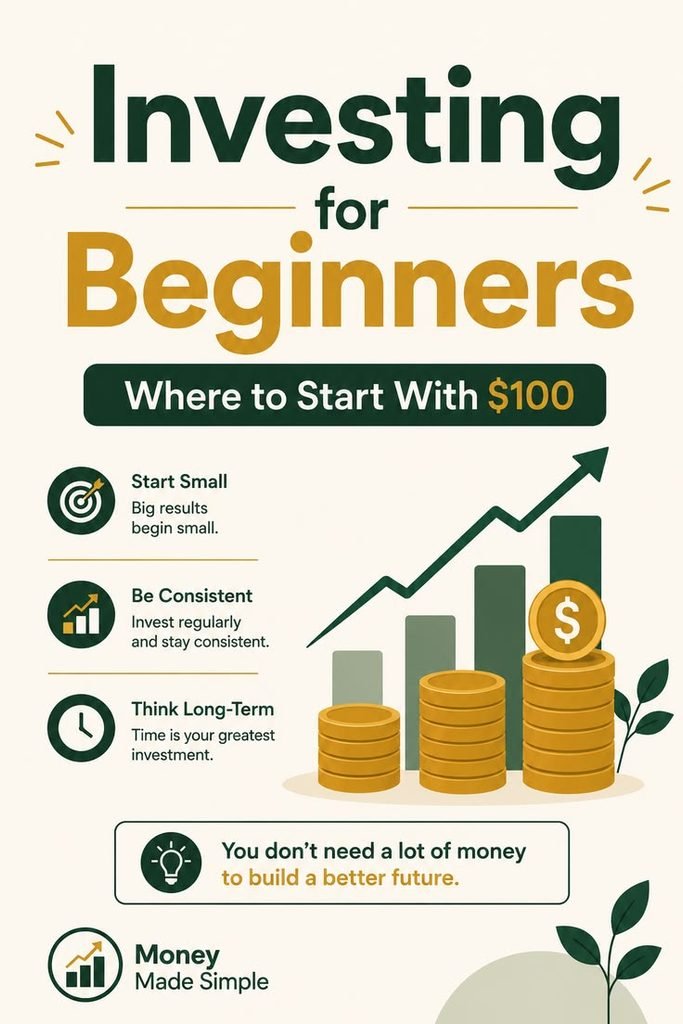
For example, automatically investing $100 each month can help establish a consistent habit without requiring a large initial investment.
The amount matters, but consistency and suitability for your financial situation are also important.
Why Diversification Matters
One of the most important concepts for beginners to understand is diversification.
Diversification means spreading your money across different investments rather than putting everything into one asset.
A diversified portfolio may contain different companies, industries, geographic markets, or asset classes.
Diversification can reduce the impact of a single investment performing poorly, although it cannot guarantee profits or prevent losses.
Final Thoughts
There are several investments and financial products that beginners can consider, including ETFs, mutual funds, index funds, bonds, Treasury securities, CDs, and retirement accounts.
The right choice depends on your financial goals, investment time horizon, risk tolerance, and personal circumstances.
Beginners should avoid rushing into investments simply because they are popular or have recently performed well. Instead, take time to understand what you are buying, how much it costs, and what could cause it to lose value.
A sensible starting point is to build a strong financial foundation, identify your goals, learn about diversification, and invest an amount that fits comfortably within your financial plan.
Investing is a long-term process. You do not need to know everything before you begin learning, but you should understand the risks before putting your money into any investment.