

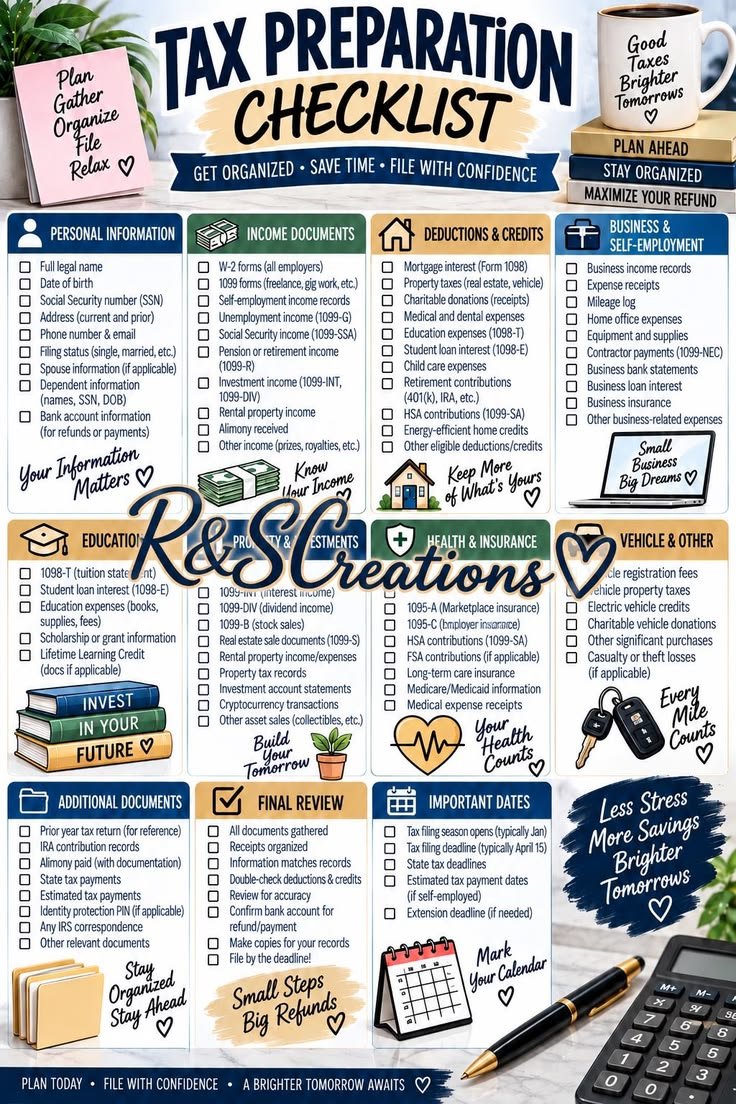


Tax season can feel stressful when you have receipts, income documents, deductions, bank statements, and other financial records scattered in different places. Preparing early can make the process more organized and help you avoid unnecessary mistakes.
For U.S. taxpayers, good tax preparation starts with keeping accurate records throughout the year. Whether you are an employee, freelancer, business owner, student, investor, or retiree, organizing your financial information before filing can make tax season easier.
Here are practical steps you can take to prepare for tax season.
1. Know Your Tax Filing Requirements
Start by understanding whether you need to file a federal income tax return and what forms may apply to your situation.
Your filing requirements can depend on factors such as:
- Income
- Age
- Filing status
- Dependents
- Self-employment
- Investment income
- Retirement income
- Other sources of taxable income
Tax rules can change, so use current information from the IRS or consult a qualified tax professional if you are unsure about your requirements.
2. Gather Your Income Documents
One of the first things you should do is collect documents showing your income.
Depending on your situation, these may include:
- Form W-2 from employers
- Form 1099 forms for certain types of income
- Self-employment income records
- Investment statements
- Retirement income documents
- Bank interest statements
- Other income records
For example, if you worked for three employers during the year, you may need to collect a W-2 from each employer.
Do not assume that only your main job matters. Make sure you account for all applicable income sources.
3. Organize Your Tax Documents
Create a dedicated folder for your tax documents.
You can use a secure digital folder or a physical filing system.
Possible categories include:
Income
Deductions
Education
Healthcare
Charitable contributions
Business expenses
Investments
Retirement
Keeping documents organized can make it easier to find information when completing your tax return.
4. Review Your Previous Tax Return
Your previous tax return can be a useful reference when preparing the next one.
Look at information such as:
- Filing status
- Dependents
- Income sources
- Retirement contributions
- Deductions
- Credits
- Carryovers
- Prior-year tax information
Your circumstances may have changed, so do not simply copy everything from the previous year.
Use your previous return as a reference while checking that your current information is accurate.
5. Keep Track of Potential Deductions
Depending on your circumstances and applicable tax rules, certain expenses may potentially qualify for deductions.
Examples can include certain:
- Business expenses
- Charitable contributions
- Education-related expenses
- Medical expenses
- State and local taxes
- Mortgage-related expenses
Not every expense automatically qualifies for a deduction.
Keep documentation supporting expenses you may claim, and check the current IRS rules or consult a tax professional before claiming an item.
6. Keep Records of Charitable Contributions
If you made charitable donations during the year, organize your records.
These might include:
- Cash donation receipts
- Organization acknowledgments
- Bank or credit card records
- Records of donated property
For example, if you donated $500 to an eligible charitable organization, keep documentation showing the contribution.
Do not rely only on your memory when preparing your tax return.
7. Organize Business and Freelance Expenses
If you are self-employed or operate a small business, tax preparation can require additional recordkeeping.
Keep records of potentially deductible business expenses such as:
- Office supplies
- Software
- Advertising
- Business insurance
- Professional services
- Equipment
- Business-related travel
For example, suppose you earned $20,000 from freelance work and had $4,000 in legitimate business expenses. Accurate records can help you properly report your income and applicable expenses.
Tax treatment varies, so keep detailed records and consult a tax professional when necessary.
8. Check Your Bank and Investment Statements
Investment and interest income can create additional tax reporting requirements.
Review statements from:
- Brokerage accounts
- Banks
- Retirement accounts
- Other financial institutions
Look for relevant tax forms and records of transactions.
If you sold investments during the year, keep records showing the purchase and sale information because the transaction may affect your tax return.
9. Review Your Retirement Contributions
Retirement contributions can be an important part of tax planning.
Review your contributions to accounts such as:
- 401(k) plans
- Traditional IRAs
- Roth IRAs
- Other eligible retirement plans
Different accounts have different tax rules, contribution limits, and eligibility requirements.
Keep your contribution records and review current IRS guidance for the relevant tax year.
10. Check Your Personal Information
Before filing, carefully check basic information.
Make sure names, Social Security numbers or other taxpayer identification information, addresses, and dependent information are accurate.
A simple error can create delays or require you to correct your return.
Also check your bank account information if you are expecting a direct deposit of a tax refund.
11. Review Your Filing Status
Your filing status can affect how your tax return is calculated.
Depending on your circumstances, filing statuses may include:
- Single
- Married filing jointly
- Married filing separately
- Head of household
- Qualifying surviving spouse
Your eligibility depends on specific IRS requirements.
If your marital or household circumstances changed during the year, pay particular attention to your filing status.
12. Watch for Tax Scams
Tax season can also bring an increase in scams.
Be cautious of unexpected messages claiming to be from the IRS or another tax-related organization.
Warning signs may include:
- Requests for immediate payment
- Threats of arrest
- Requests for unusual payment methods
- Suspicious links
- Requests for sensitive information
- Promises of unusually large refunds
Do not provide financial or personal information simply because someone claims to be a tax official.
Verify information through official sources.
13. Decide How You Will File
You generally have several options for preparing your tax return.
You may:
- Use tax preparation software
- Work with a tax professional
- Prepare the return yourself using applicable IRS resources
Your choice may depend on the complexity of your financial situation.
Someone with a straightforward W-2 job may have different needs from someone who owns a business, has multiple investment accounts, owns rental property, or has complicated tax circumstances.
14. Do Not Wait Until the Last Minute
Waiting until the deadline can create unnecessary stress.
Start gathering documents early.
Create a checklist and mark each item as you receive it.
For example:
☐ W-2 forms
☐ 1099 forms
☐ Bank statements
☐ Investment documents
☐ Charitable contribution records
☐ Business expense records
☐ Education documents
☐ Previous tax return
☐ Other relevant records
Early preparation gives you more time to identify missing information.
15. Check Your Return Carefully
Before submitting your tax return, review it carefully.
Check:
- Income
- Deductions
- Credits
- Filing status
- Dependents
- Bank information
- Mathematical calculations
- Contact information
Make sure information from your documents has been entered correctly.
If you use tax software, review the final summary before submitting.
16. Keep Your Records After Filing
Tax preparation does not end when you submit your return.
Keep copies of your tax return and supporting records for the appropriate period under applicable IRS rules.
Store them securely, particularly documents containing sensitive information.
A well-organized recordkeeping system can make future tax seasons much easier.
A Simple Tax Season Preparation Checklist
You can prepare by following these steps:
Step 1: Determine your filing requirements.
Step 2: Collect all income documents.
Step 3: Organize receipts and financial records.
Step 4: Review your previous tax return.
Step 5: Identify potentially relevant deductions and credits.
Step 6: Review retirement and investment records.
Step 7: Check your personal information.
Step 8: Choose how you will file.
Step 9: Review your completed return carefully.
Step 10: Keep copies of your return and supporting documents.
Final Thoughts
Preparing for tax season does not have to be overwhelming. The earlier you organize your income documents, receipts, deductions, investment records, and other financial information, the easier it can be to complete your tax return accurately.
Start by creating a simple filing system and gathering documents as they become available. Review your financial records carefully and make sure you understand which tax rules apply to your circumstances.
If your tax situation is complicated, consider working with a qualified tax professional.
Most importantly, use current information for the specific tax year you are filing. Tax rules, deadlines, deductions, credits, and contribution limits can change, so check official IRS guidance before making important tax decisions.
Educational note: This article is for general educational purposes and is not personalized tax or financial advice. U.S. federal and state tax rules can change, and individual tax situations vary.