


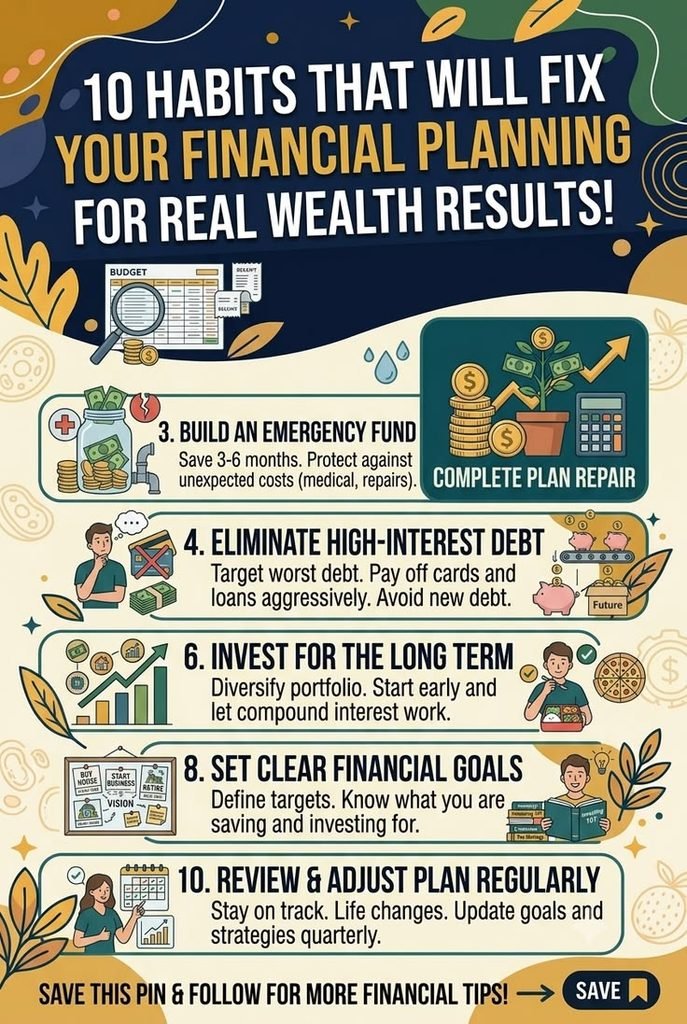
Financial planning is an important part of managing money and preparing for the future. Whether you are just starting your career, raising a family, running a business, or approaching retirement, having a clear financial plan can help you make better decisions about your income, spending, savings, and investments.
Without a plan, it can be easy to spend money without understanding where it is going, overlook important financial goals, or become unprepared for unexpected expenses. Financial planning provides a structured way to understand your current financial situation and work toward your future goals.
What Is Financial Planning?
Financial planning is the process of organizing your money and making decisions based on your current financial situation and future objectives. It can include budgeting, saving, managing debt, investing, insurance, taxes, retirement planning, and preparing for unexpected expenses.
A financial plan does not have to be complicated. For one person, it might simply involve creating a monthly budget and building an emergency fund. For another person, it may involve managing investments, planning for retirement, purchasing insurance, and saving for a child’s education.
The key idea is to create a strategy that connects your financial decisions with your goals.
Why Is Financial Planning Important?
One of the biggest benefits of financial planning is that it gives your money a purpose. Instead of making financial decisions randomly, you can establish specific objectives and determine how your income can help you achieve them.
For example, you might want to save $5,000 for an emergency fund, pay off credit card debt, save for a home down payment, or contribute regularly to retirement accounts. A financial plan can help you determine how much money you need to set aside and how long it may take to reach each goal.
Financial Planning Helps You Create a Budget
A budget is one of the foundations of financial planning. It helps you understand how much money comes into your household and where that money goes.
By tracking income and expenses, you can identify essential costs, discretionary spending, recurring bills, and areas where you may be able to reduce unnecessary expenses.
For example, if you earn $4,000 per month after taxes and spend $3,800, you may have limited room for savings. A budget can help you identify opportunities to redirect some spending toward important goals.
A realistic budget should account for necessities such as housing, food, transportation, utilities, debt payments, savings, and other regular expenses.
It Helps You Build Emergency Savings
Unexpected expenses are a normal part of life. A car may need repairs, a major household appliance may stop working, or an unexpected bill may appear.
An emergency fund can help you handle these situations without relying entirely on credit cards or loans.
The amount you need depends on your circumstances, income stability, expenses, and responsibilities. Many financial experts recommend building several months of essential living expenses in emergency savings, although the appropriate amount varies from person to person.
Financial planning makes emergency savings an intentional part of your overall strategy.
It Can Help You Manage Debt
Debt can become difficult to manage when payments consume a large portion of your income. Financial planning can help you understand how much you owe, what interest rates you are paying, and how different repayment strategies could affect your finances.
For example, you might organize your debts from the highest interest rate to the lowest and focus additional payments on expensive debt while continuing minimum payments on other accounts.
A financial plan can also help you avoid taking on unnecessary new debt by making sure borrowing decisions fit within your overall budget.
Financial Planning Supports Long-Term Goals
Some financial goals take years to achieve. Buying a home, building retirement savings, starting a business, or paying for education may require consistent contributions over a long period.
Without a plan, it can be easy to postpone these goals because immediate expenses seem more important.
Financial planning allows you to break large goals into smaller steps. Instead of simply saying, “I want to retire comfortably,” you can determine how much you may need to save and how regularly you want to contribute.
Your plan can then be reviewed and adjusted as your income, expenses, and circumstances change.
It Encourages Better Saving Habits
Saving becomes easier when it is part of a regular system. Rather than waiting to see what money remains at the end of the month, you can include savings as one of your planned financial priorities.
Automatic transfers can also make saving more consistent. For example, you might arrange for a portion of each paycheck to move automatically into a savings or investment account.
Over time, regular contributions can help you build financial resources for both short-term and long-term goals.
Financial Planning Can Prepare You for Retirement
Retirement planning is another important part of financial planning. The earlier you begin thinking about retirement, the more time you potentially have to save and invest.
A retirement plan may include employer-sponsored retirement accounts, individual retirement accounts, Social Security benefits, personal savings, and investments.
Your retirement needs will depend on factors such as your expected lifestyle, income, expenses, retirement age, and other sources of income.
Reviewing your retirement strategy regularly can help you determine whether your savings approach remains appropriate as your circumstances change.
It Helps You Prepare for Unexpected Changes
Life does not always follow a predictable path. Income can change, family circumstances can change, and unexpected expenses can arise.
A financial plan can help you prepare for these possibilities by combining emergency savings, appropriate insurance coverage, manageable debt, and diversified financial resources.
For example, someone who has an emergency fund may have more flexibility if they experience a temporary reduction in income.
Financial planning does not eliminate financial uncertainty, but it can improve your ability to respond to it.
Financial Planning Can Reduce Financial Stress
Money problems can create significant stress, especially when people do not know how much they owe, whether they are saving enough, or whether they can afford an upcoming expense.
Having a clear financial picture can make these questions easier to answer.
When you know your income, expenses, debts, savings, and goals, you can make decisions based on information rather than guesswork.
A financial plan can also give you a sense of progress. Reaching milestones such as paying off a credit card, building an emergency fund, or increasing retirement contributions can provide motivation to continue.
How Can You Start Financial Planning?
You do not need to have a large income or significant savings to begin financial planning. Start by understanding your current situation.
First, calculate your monthly income and list your regular expenses. Next, review your debts and interest rates. Then identify your most important short-term and long-term goals.
After that, create a realistic budget and decide how much you can save each month. Building an emergency fund can be an important early priority. Once your basic financial foundation is stronger, you can consider longer-term goals such as retirement and investing.
Review your plan periodically rather than creating it once and forgetting about it.
Final Thoughts
Financial planning is important because it gives you a structured approach to managing your money and preparing for the future. It can help you create a budget, build emergency savings, manage debt, achieve financial goals, prepare for retirement, and respond to unexpected changes.
A financial plan does not need to be complicated. What matters most is having a clear understanding of where your money is going and making deliberate decisions about where you want it to go.
Your financial situation will change over time, so your plan should change with it. By reviewing your goals, tracking your progress, and adjusting your strategy when necessary, you can build a stronger foundation for long-term financial management.