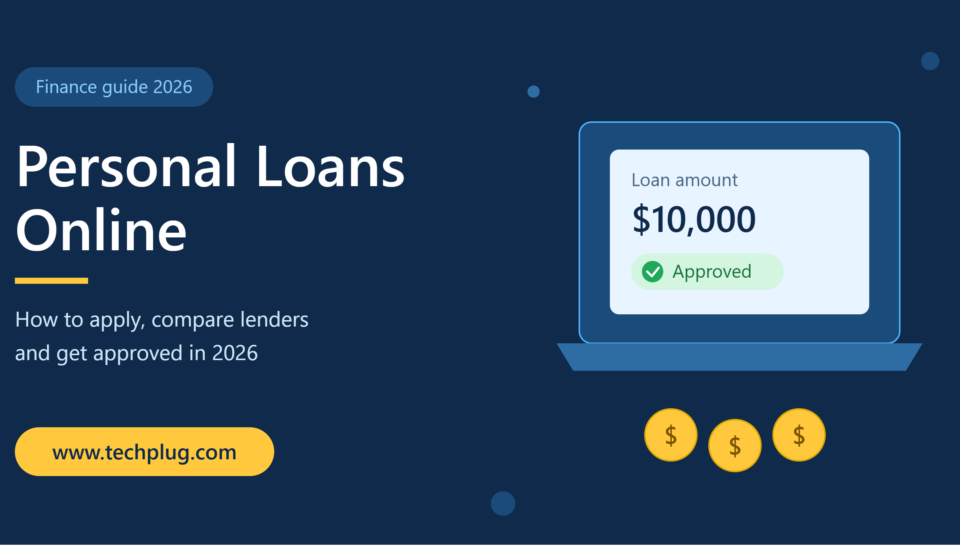

Whether you want to consolidate credit card debt, cover a home repair or pay for a major purchase, an online personal loan can be one of the fastest ways to get funds. Applications take minutes, decisions often come the same day, and money can reach your account within a few business days. But speed shouldn’t replace care. This guide covers how online personal loans work, how to compare lenders and how to improve your chances of approval.
What Is an Online Personal Loan?
A personal loan is a lump sum you repay in fixed monthly installments over a set term, usually one to seven years. Most are unsecured, meaning you don’t pledge collateral such as a car or home. Instead, lenders judge your creditworthiness, income and existing debts.
Online lenders include banks, credit unions and fintech companies. Rates vary widely. Current lender comparisons show APRs ranging from under 7% for strong borrowers to around 36% for those with weaker credit, with loan amounts from about $1,000 up to $100,000, depending on the lender.
Step 1: Check Your Credit and Set Your Budget
Before you browse offers, know where you stand. Review your credit reports for free at AnnualCreditReport.com and correct any errors, since mistakes can pull your score down unfairly. Then check your credit score. Many lenders set minimums, and some cater to borrowers with scores in the 600s or lower, though they charge more.
Next, decide exactly how much you need and what monthly payment fits your budget. Borrowing more than necessary means paying more interest. A loan calculator can show how different amounts, rates and terms change your payment and total cost.
Step 2: Compare Lenders the Smart Way
Don’t accept the first offer you see. Compare at least three to five lenders on these factors:
- APR. This shows the true annual cost of borrowing, including interest and certain fees. It’s more useful than the interest rate alone.
- Origination fees. Some lenders deduct 1% to 10% of the loan upfront, so you receive less than you borrowed.
- Loan terms. A longer term lowers your monthly payment but increases total interest.
- Funding speed. Some lenders deposit funds within one business day, while others take a week.
- Prepayment penalties. Ideally, you can pay the loan off early without extra charges.
- Eligibility and flexibility. Check minimum credit score, income requirements, and whether the lender offers hardship options or payment date changes.
Credit unions often offer lower maximum APRs than online-only lenders, so include one or two in your comparison. Read recent customer reviews and confirm that any lender you consider is legitimate and properly licensed.
Step 3: Prequalify Before You Apply
Most reputable online lenders let you prequalify, which shows estimated rates and terms using a soft credit check. A soft check doesn’t affect your credit score, so you can compare multiple offers risk-free. Only a formal application triggers a hard inquiry, which can lower your score by a few points temporarily.
Once you’ve compared prequalified offers, pick the one with the best combination of APR, fees and terms, not just the lowest monthly payment.
Step 4: Gather Your Documents and Apply
Having paperwork ready speeds up approval. Lenders commonly ask for:
- Government-issued photo ID
- Social Security number
- Proof of income, such as recent pay stubs, W-2s or tax returns
- Bank statements
- Proof of address
Complete the application carefully. Typos or mismatched information can cause delays or denials. After submitting, you may receive an instant decision or be asked for extra verification. If approved, review the loan agreement closely before signing, then confirm the repayment schedule and the exact amount you’ll receive.
How to Improve Your Approval Odds
If your credit is fair or limited, a few moves can strengthen your application:
- Pay down existing debt. A lower debt-to-income ratio signals that you can handle another payment.
- Add a co-signer or co-borrower. Someone with strong credit may help you qualify or secure a lower rate.
- Choose a smaller loan. Requesting less lowers the lender’s risk.
- Avoid multiple hard inquiries. Stick to prequalification until you’re ready to commit.
- Consider a secured loan. Offering collateral can unlock better terms, though you risk losing the asset if you default.
Red Flags to Avoid
Online lending attracts scammers, so protect yourself. Walk away from any lender that:
- Guarantees approval regardless of credit
- Asks for an upfront fee before releasing funds
- Pressures you to act immediately
- Lacks a physical address, contact information or clear terms
- Requests payment by gift card, wire transfer or cryptocurrency
Also be cautious with payday and other very short-term loans, whose effective APRs can reach triple digits. If you’re struggling with an emergency expense, a nonprofit credit counselor or a credit union’s small-dollar loan may be a safer alternative.
Final Thoughts
An online personal loan can be a practical tool when used responsibly. Know your credit, set a realistic budget, compare offers through prequalification and read the fine print before signing. A few extra minutes of research could save you hundreds or even thousands of dollars in interest over the life of the loan.
This article is for general information only and isn’t financial advice. Consider your own circumstances or speak with a licensed financial professional before borrowing.